
For a long time now, the vibrant, moving traditions of Día de los Muertos have captured my heart. I have admired the beautiful way this holiday honors life, memory, and the bond we share with those who have passed on. But this year, my bestie and I are officially packing our bags and heading to Mérida, Mexico, to immerse ourselves completely in Hanal Pixán, the region’s breathtaking Mayan celebration of the Day of the Dead.
In preparation for this adventure, I have been doing a ton of research. I thought I would share what I have learned.
An ofrenda is not a memorial. Not in the way most people think of one.
It is an invitation.
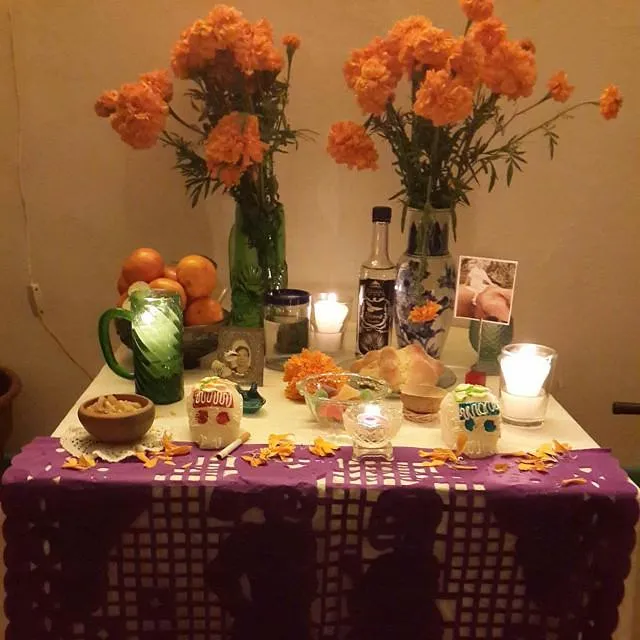
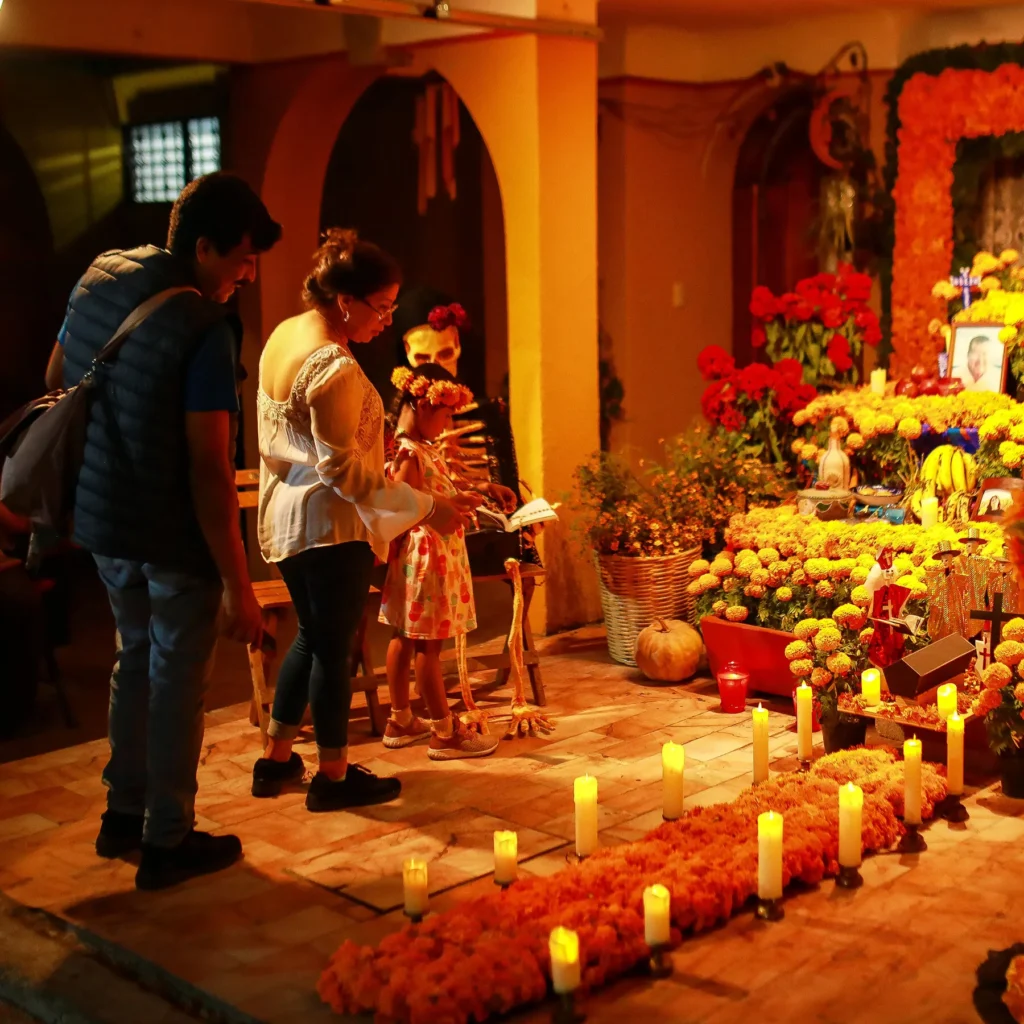
Every marigold petal, photograph, plate of someone’s favorite food is placed with a genuine belief: that on this one night, the border between the living and the dead becomes thin enough for loved ones to actually come home, if only for a few hours. Families spend days preparing these altars. They remember what a grandfather liked to drink, what a grandmother’s favorite dish was. They arrange photographs in careful order of who came before whom.
This is less about mourning and more about continuing a relationship that death was never allowed to fully end. There is something beautiful about a tradition built around refusing to let love disappear just because someone is gone. That is Día de los Muertos. And it is one of the most extraordinary things a traveler can witness anywhere in the world.
Día de los Muertos did not begin as a single celebration. Its roots go back approximately 3,000 years to the indigenous cultures of Mesoamerica, particularly the Aztec, Maya, Toltec, and other civilizations who held elaborate multi-month ceremonies honoring the dead. For these cultures, death was not an ending. Instead, it was understood as a continuation of life in a different form.
When Spanish colonizers arrived in the 16th century, they brought Catholicism with them. They also brought All Saints’ Day and All Souls’ Day, observed on November 1 and 2. Rather than replacing the indigenous ceremonies, these observances blended together over centuries. The result is what we celebrate today: a uniquely Mexican tradition that carries both pre-Columbian spiritual beliefs and Catholic influence in the same marigold-covered altar.
UNESCO recognized Día de los Muertos as an Intangible Cultural Heritage of Humanity in 2008. That recognition matters. It signals that this celebration belongs to the living communities who practice it, not to tourism or media representations of it.
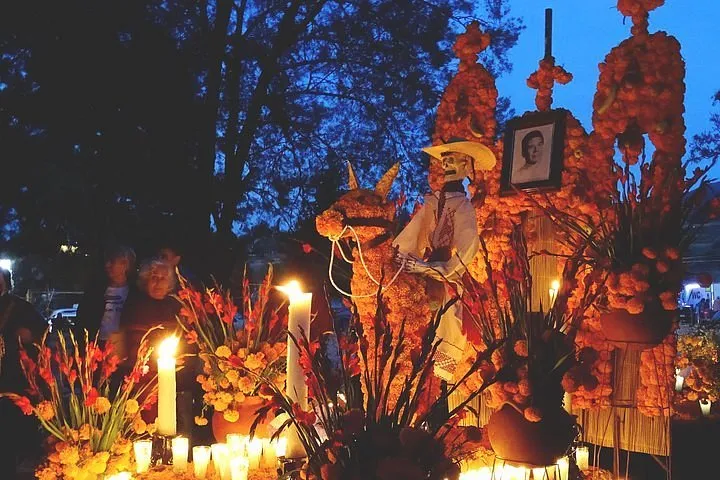
Cempasúchil marigolds are chosen specifically because of their strong scent and vivid orange color. Both qualities are believed to guide spirits back along the path home from the spirit world. You will see them everywhere during the celebration: in enormous market bundles, strewn in petal paths leading from the cemetery gate to a family’s altar, draped across photographs and candles.
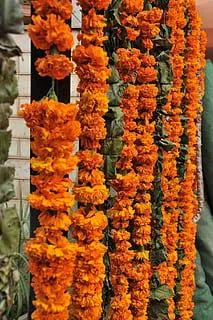
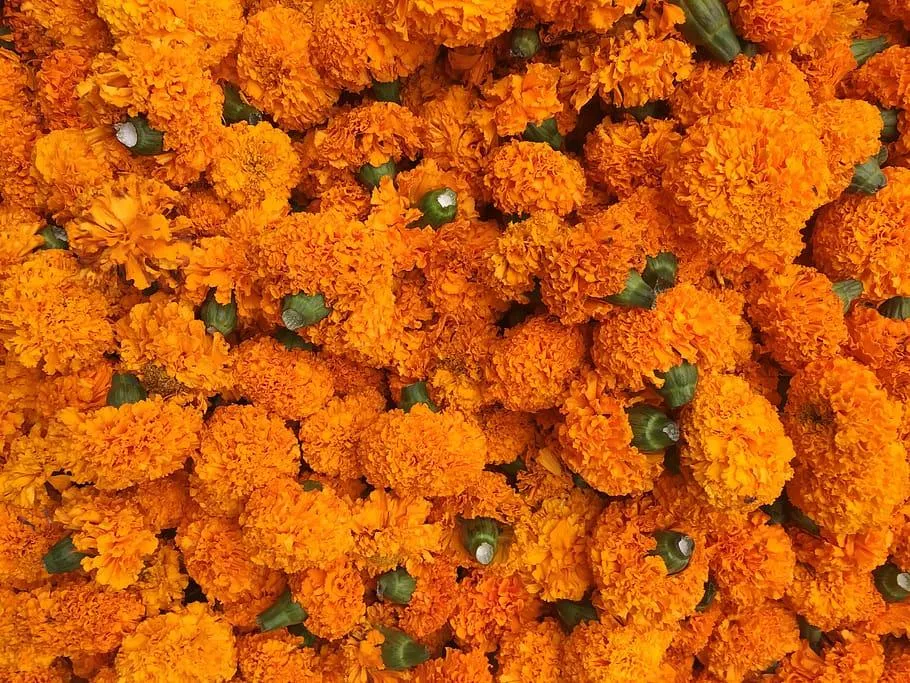
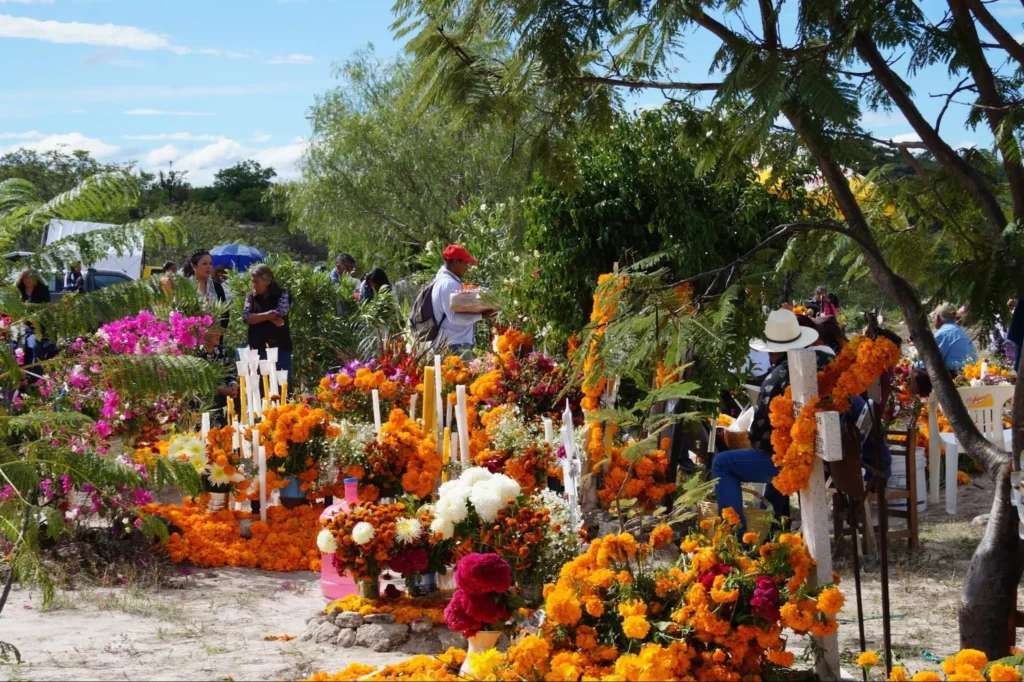
The scent is unmistakable once you have experienced it in context. Many travelers describe it as one of the most sensory memories of a Día de los Muertos visit. It is not a background detail. It is part of how the tradition works.
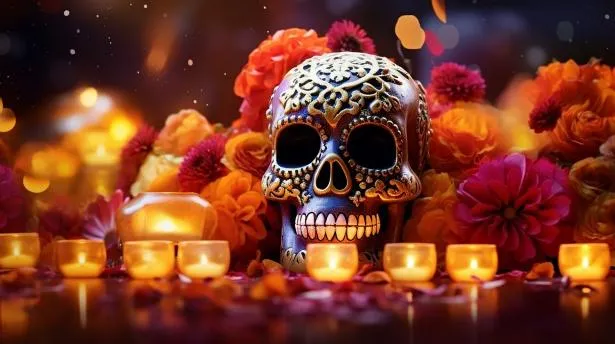
Additionally, copal incense burns alongside the marigolds. Its smoke is believed to carry prayers upward and to further guide spirits through the darkness toward home.
UNDERSTANDING THE FULL CALENDAR OF DAYS
The celebration spans from late October through November 3. Each day carries its own specific purpose, which most visitors do not realize until they look closely.
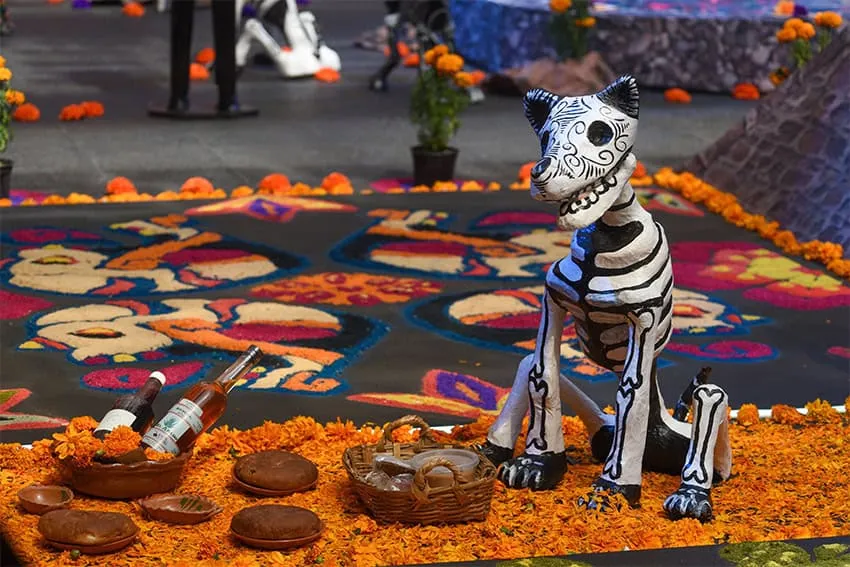
October 27 has become widely embraced as Día de los Muertos de las Mascotas, the Day of the Dead for Pets. Families honor beloved animals who have passed, often with small ofrendas that include favorite toys and treats.
October 28 is dedicated to those who died violently, tragically, or in sudden accidents. October 29 honors those who drowned. October 30 is set aside for forgotten or lonely souls, those who passed without families to remember them.
October 31 honors unbaptized infants and unborn children, sometimes called angelitos.
November 1 is Día de los Angelitos, also observed as All Saints’ Day. Families light candles and place sweet ofrendas on their altars: toys, small sugar skulls, and the favorite things of children who have died. The mood is tender and gentle.
November 2 is the main celebration. Families gather at home altars and in cemeteries, sharing favorite foods, tequila, music, and stories to honor the lives of adult ancestors. This is the day most associated with the full visual expression of Día de los Muertos.
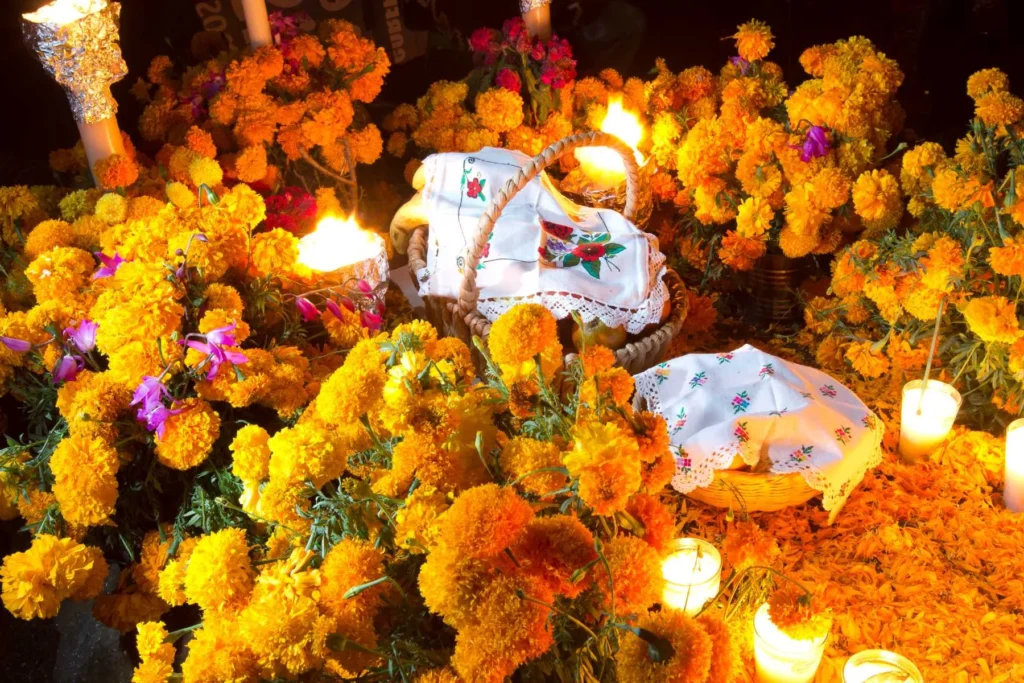
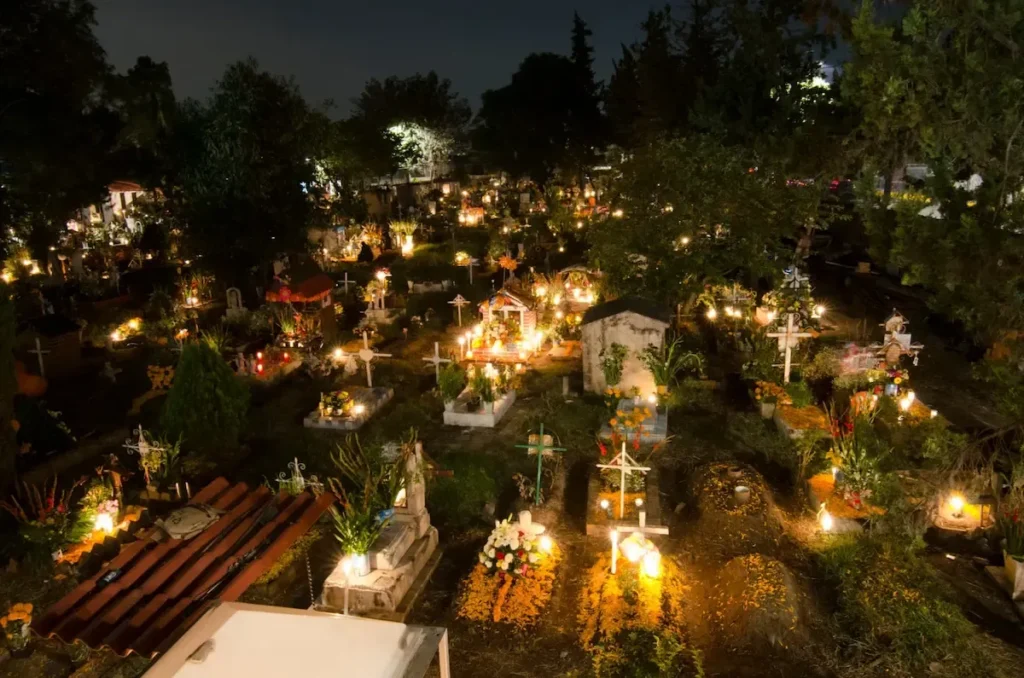
November 3 is the farewell. The last candles and incense are burned to bid farewell to lingering spirits as they return to the spirit world.
WHAT AN OFRENDA CONTAINS AND WHY
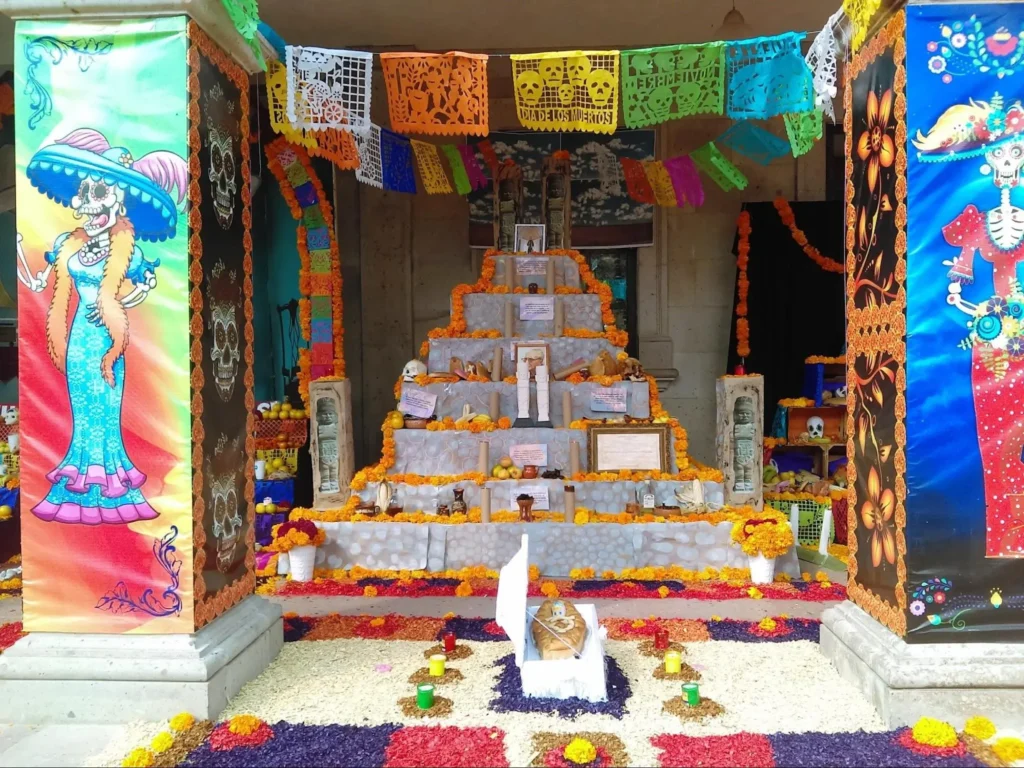
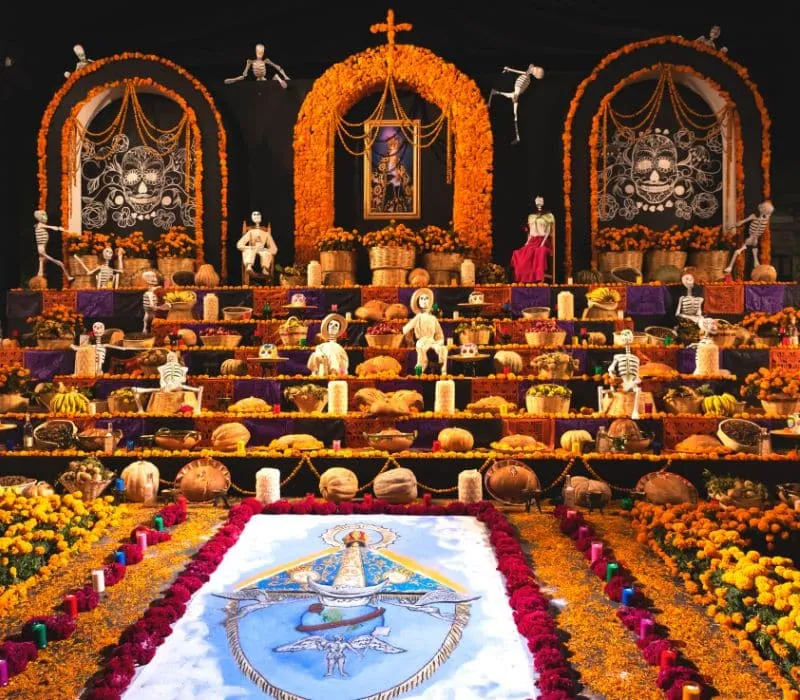
Building an ofrenda is an act of memory. Each element serves a specific purpose in guiding and welcoming a spirit home.
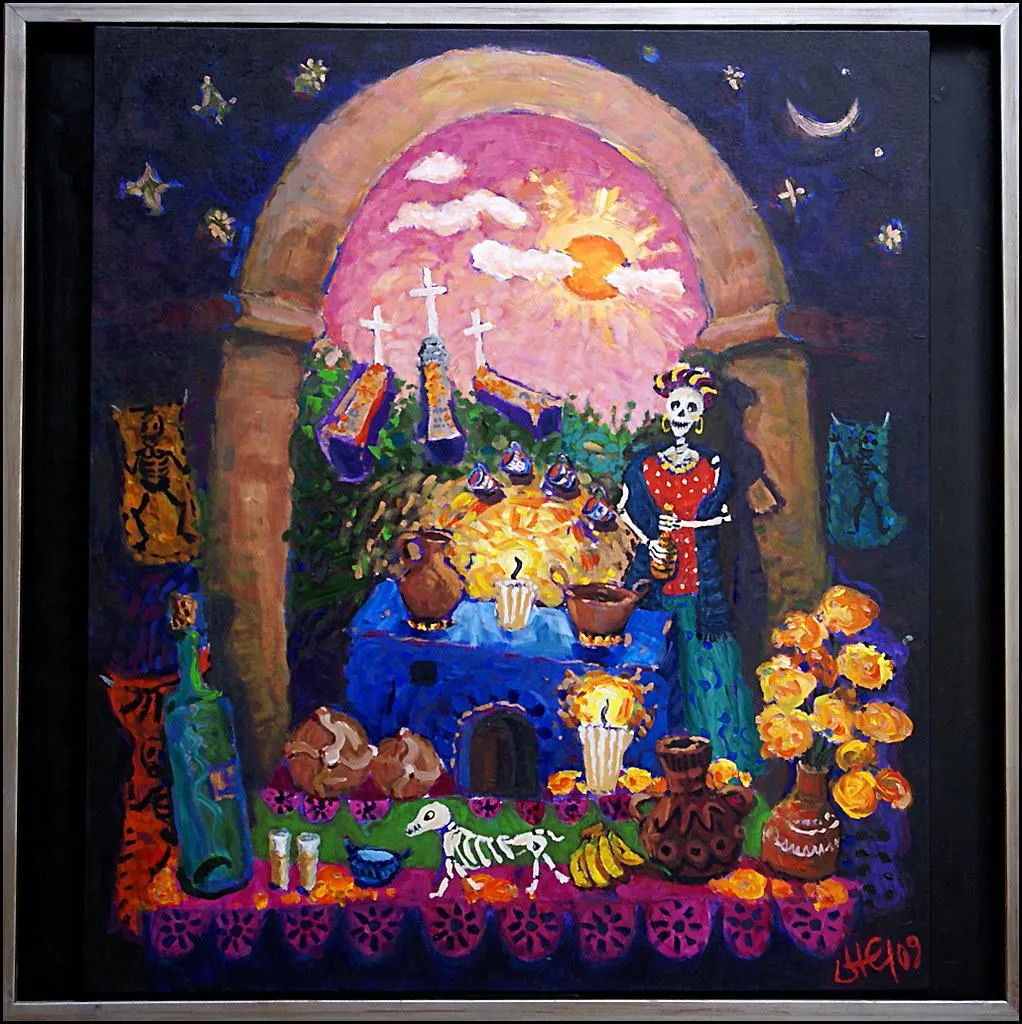
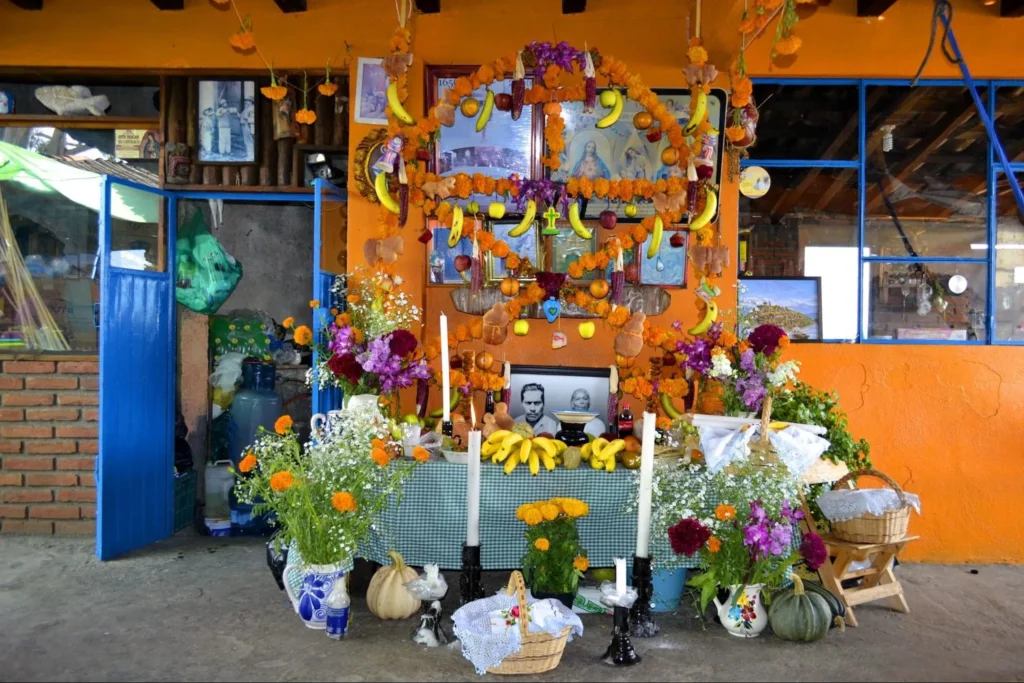
Photographs are placed to help spirits recognize where to return. Food and drink are chosen specifically for what the deceased loved in life. Agua is always included because the journey from the spirit world is long and spirits arrive thirsty. Salt represents purification. Bread, pan de muerto, is baked specifically for this season and placed on the altar.
Furthermore, personal objects matter deeply. A pair of glasses, a favorite book, a tool someone worked with for decades: these tell the spirit they are in the right place. The candles provide light along the path home. The marigold petals extend that path from the cemetery or the front door all the way to the altar itself.
The layers of the ofrenda also carry meaning. Most traditional altars are built in two or three tiers, representing the earth, the underworld, and the heavens.
HOW IT IS CELEBRATED ACROSS MEXICO
Oaxaca
Oaxaca is considered by many to be the heart of Día de los Muertos in Mexico. The celebrations here draw on deep Zapotec traditions that predate the Spanish arrival, and the result is one of the most visually and spiritually intense observances anywhere in the country.
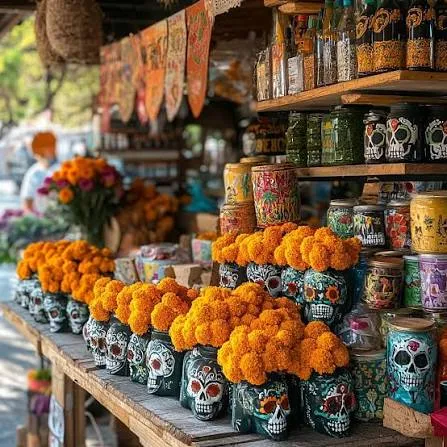
The city’s markets, particularly Mercado Benito Juárez, fill with marigold vendors, intricate sugar skull artisans, and elaborate altar displays for weeks before the main dates. The Pantéon General cemetery becomes the center of the celebration on the night of November 1 into November 2, when families gather among the graves with candles, flowers, food, and music. The cemetery glows.
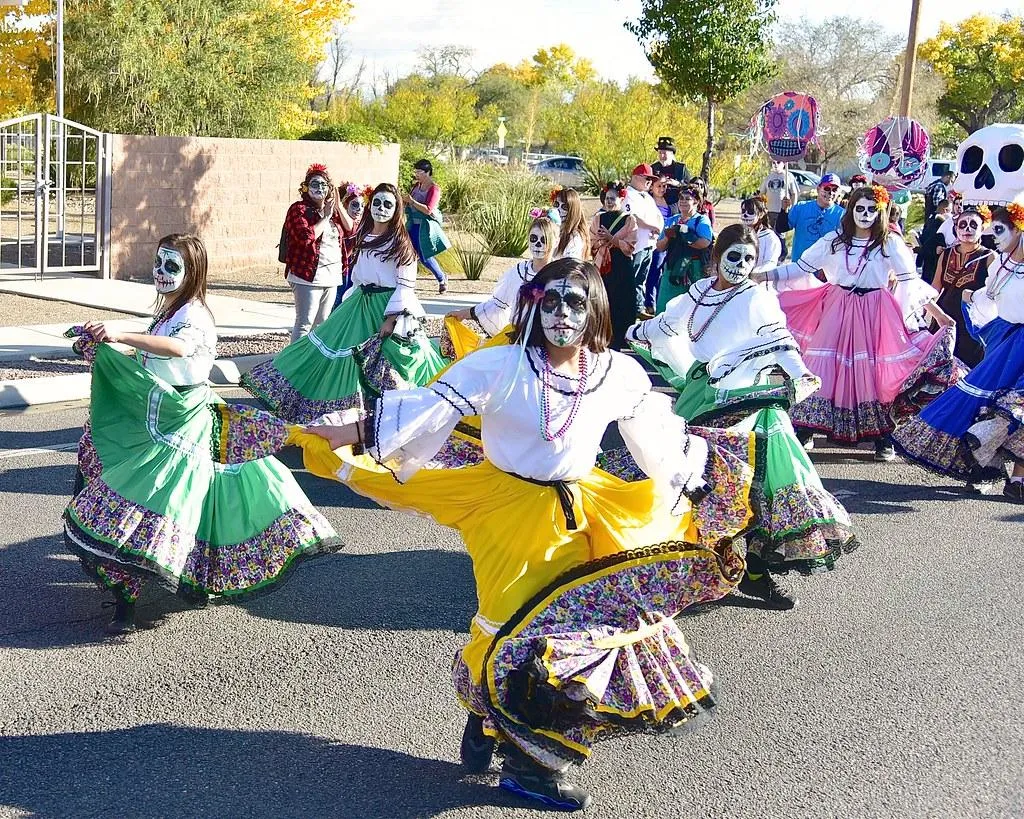
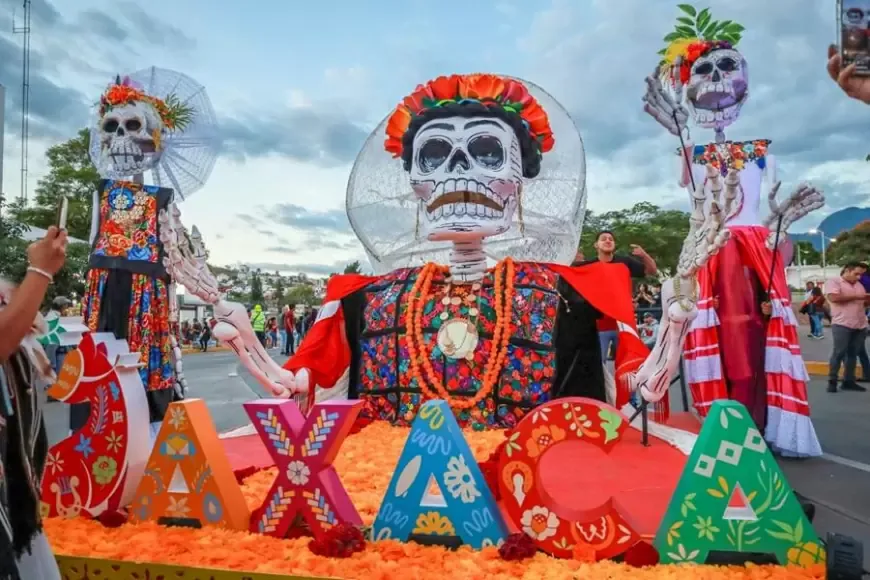
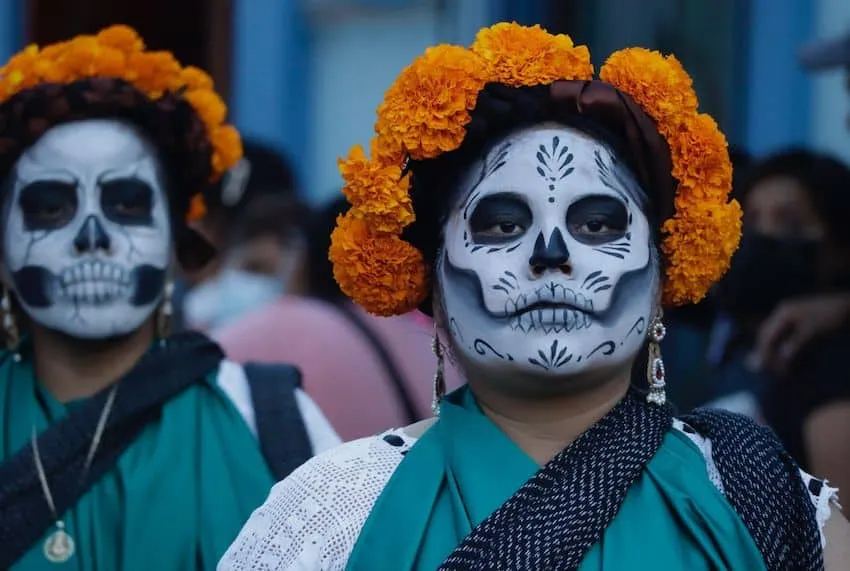
Additionally, Oaxaca hosts a procession called the Comparsas, where groups in elaborate costumes and face paint walk through the streets with music, dance, and giant papier-mâché figures. It is joyful, loud, and deeply moving at the same time.
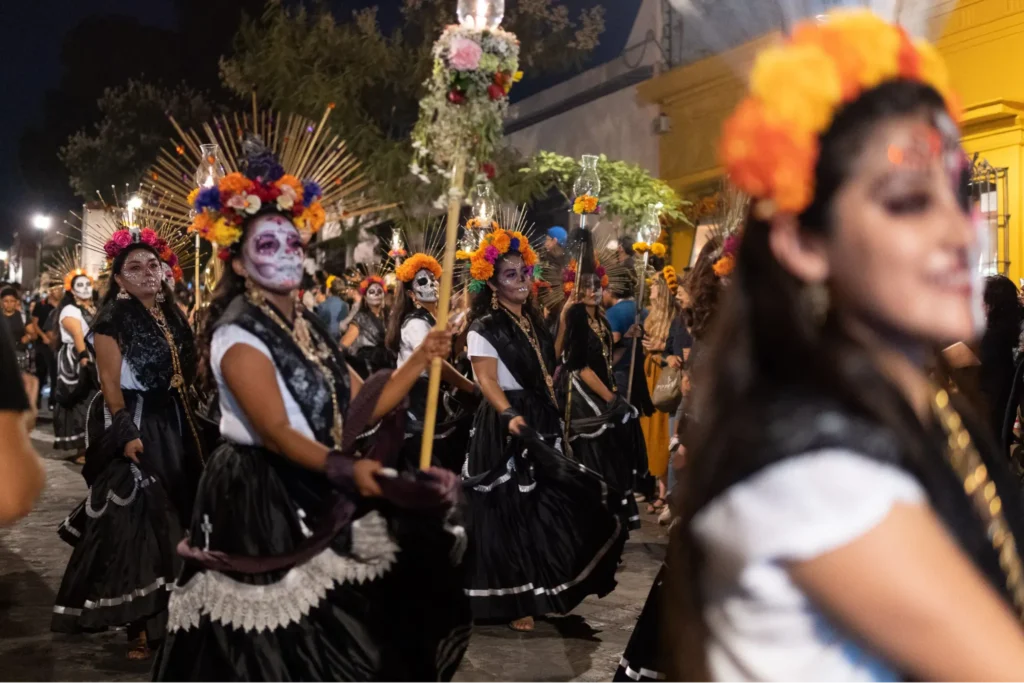
Oaxaca is also where to find the finest mezcal, the traditional mole negro, and the most deeply rooted artisan traditions in Mexico. If you can only choose one city for this celebration, Oaxaca is the one most travelers and most locals point to.
Mexico City
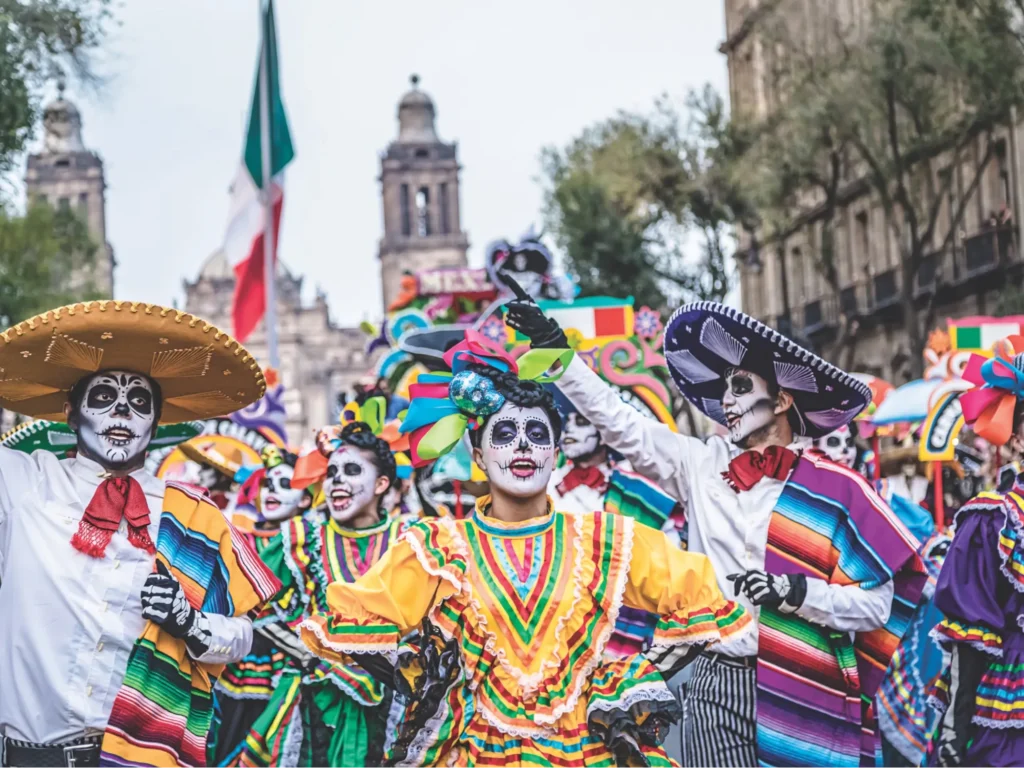
Mexico City celebrates Día de los Muertos on an enormous scale. The Grand Parade along Paseo de la Reforma, which runs from Bosque de Chapultepec past the Angel de la Independencia monument, draws enormous crowds and features towering skeleton puppets, costumed participants, floats, and live music. It is free to attend and takes place in daylight hours, making it accessible for nearly every traveler.
The historic neighborhoods each add their own dimension. Coyoacán, the bohemian district where Frida Kahlo was born, celebrates with particularly strong cultural energy and outdoor altars throughout its central square. The Museo del Templo Mayor, built directly on Aztec ruins in the historic center, holds programming that connects the contemporary celebration to its pre-Columbian origins.
Moreover, the city’s markets and public plazas build elaborate community ofrendas in the days before November 2. These are worth visiting on their own, not just as backdrops for photographs.
Mérida and the Yucatán
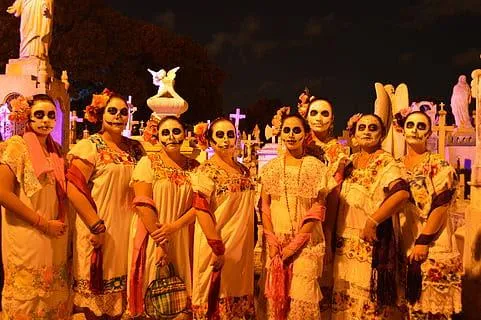
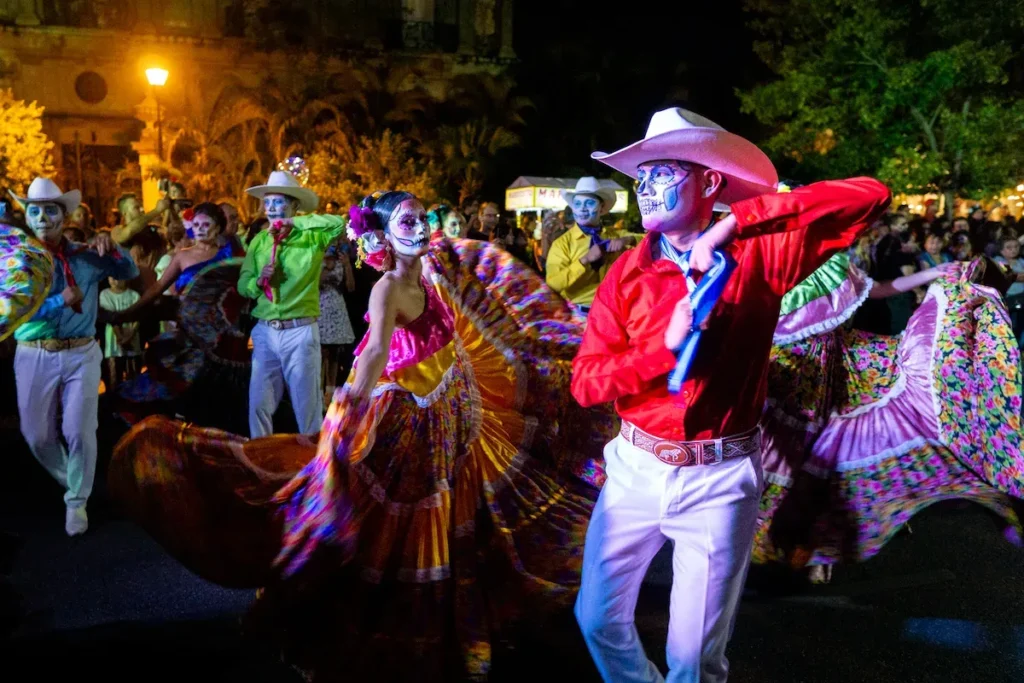
Mérida, the capital of Yucatán state, celebrates a version of Día de los Muertos deeply rooted in Maya tradition. Here the celebration is known as Hanal Pixán, which translates roughly as “food for souls” in the Yucatec Maya language. The Maya practice predates Spanish colonization and carries its own distinct ceremonies, foods, and beliefs about how the dead return.
The traditional foods of Hanal Pixán are different from those in Oaxaca or central Mexico. Mucbipollo, a large tamale cooked underground in a clay pot, is prepared specifically for this season. The cemeteries of Mérida are lit with candles and filled with marigolds. Families hold all-night vigils with music and shared meals.
Furthermore, Mérida’s colonial architecture provides a stunning visual backdrop for the processions and public altars. The city tends to be less crowded than Oaxaca or Mexico City during this period, which makes it an excellent choice for travelers who want a deeply immersive experience without the most intense tourism pressure.
Puerto Vallarta
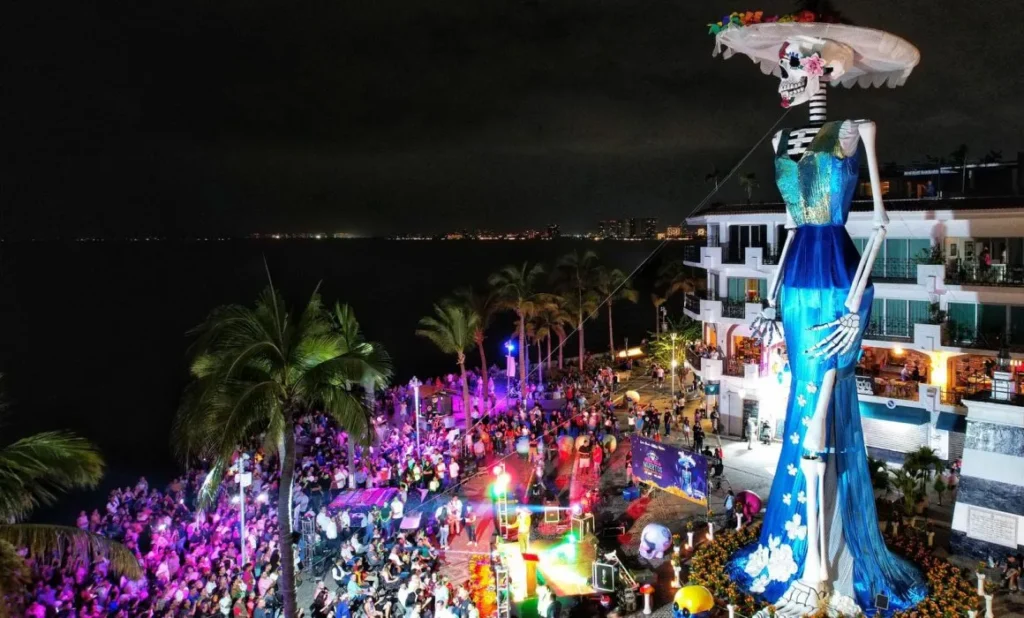
Puerto Vallarta’s Día de los Muertos celebration has grown significantly in recent years and now offers a rich and accessible experience for visitors. The Malecón waterfront fills with altars, performers, and community events in the days leading up to November 2.
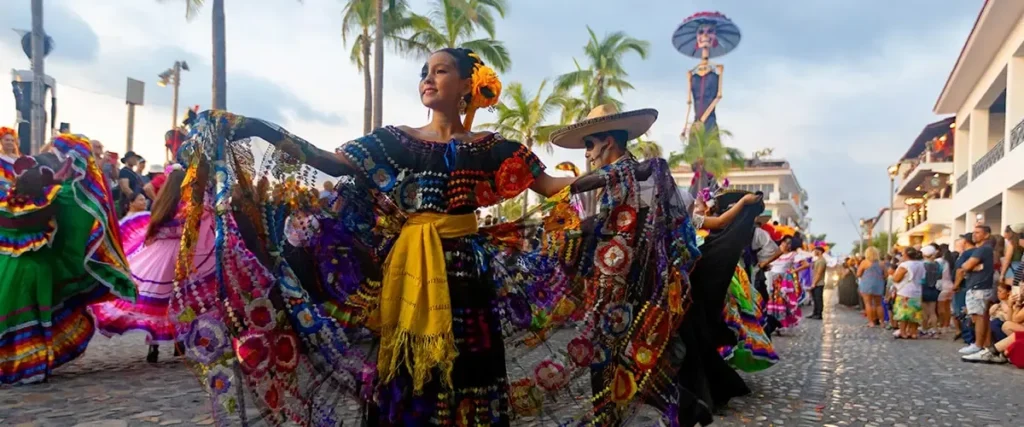
The most striking feature is the Catrina parade along the waterfront, where participants in elaborate skeleton makeup and period costumes create a processional that blends humor, beauty, and genuine reverence. The old town, specifically the area around the Church of Our Lady of Guadalupe, holds some of the most elaborate public altars in the city.
Additionally, several resorts and local organizations offer guided cultural experiences during this period: altar building workshops, cemetery visits with local guides, and cooking classes focused on the traditional foods of the season. For travelers who want structure and context alongside the public celebrations, Puerto Vallarta delivers that well.
Pátzcuaro and the Lake Region of Michoacán
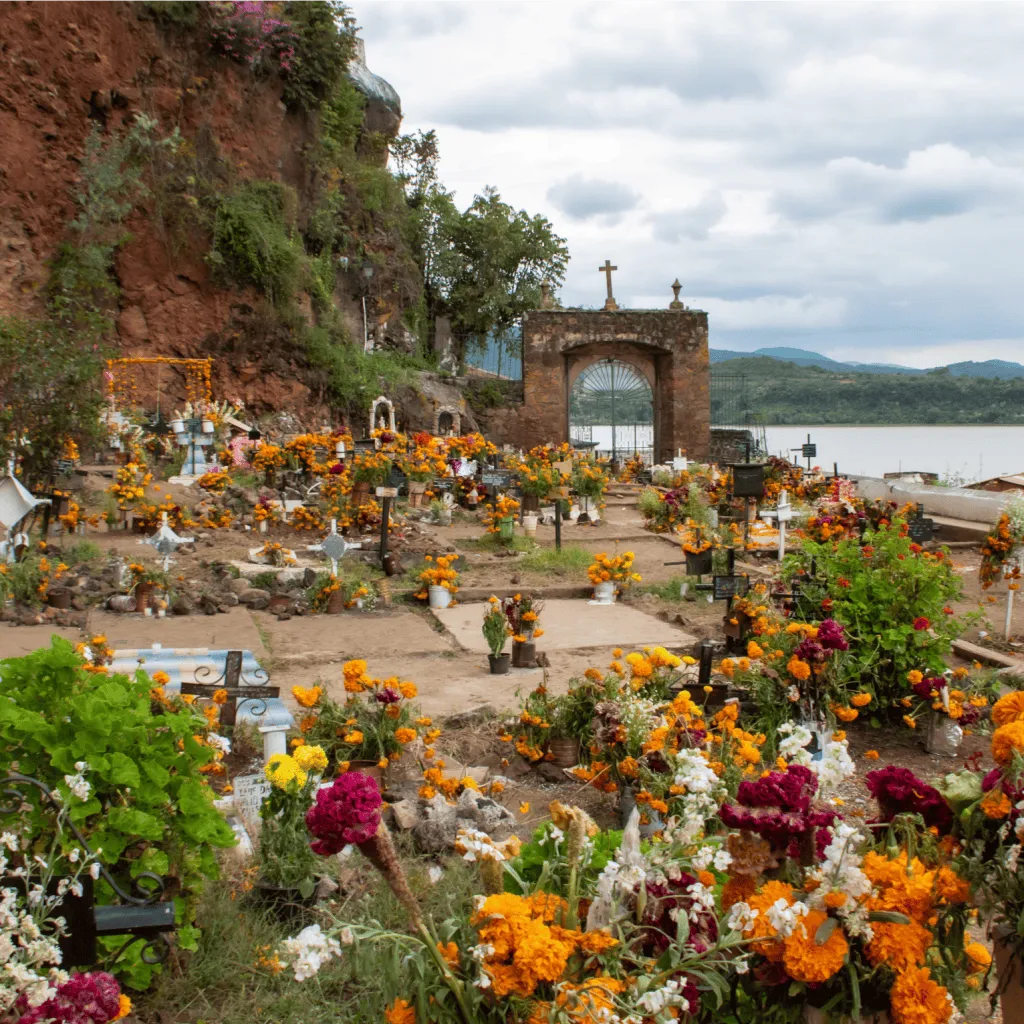
Pátzcuaro is a colonial lakeside town in the state of Michoacán and holds one of the oldest and most celebrated Día de los Muertos observances in all of Mexico. The Purépecha people of this region have maintained their own pre-Columbian traditions around honoring the dead, and those traditions are very much alive.
On the night of November 1, families row candle-lit boats across Lake Pátzcuaro to the island of Janitzio, where they hold all-night vigils in the cemetery. The lake, lit by hundreds of candles reflected on the water, is one of the most photographed images associated with Día de los Muertos anywhere in Mexico.
However, the visual beauty of Janitzio also means it draws large numbers of visitors each year. Families are holding genuine vigils for their actual loved ones in the middle of an experience that has become one of Mexico’s most recognized photographs. Travel respectfully here. Observe. Do not interrupt.
San Miguel de Allende
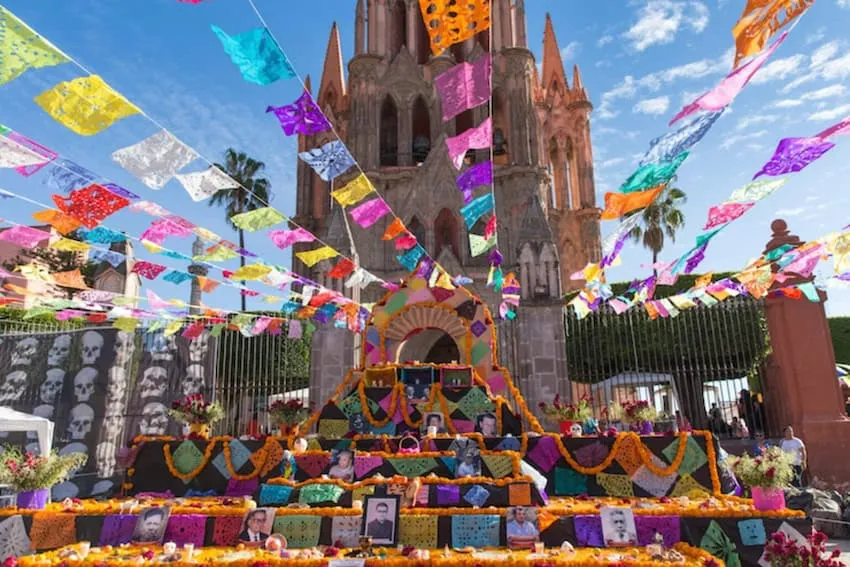
San Migue de Allende combines a large international community of artists and expatriates with a deeply Mexican cultural core, and the result is a Día de los Muertos celebration that is visually extraordinary and highly accessible for first-time visitors.
The town holds an outdoor market, a procession, and a large community altar installation in the Jardín Principal, the central square. The artistic community contributes elaborate installations and gallery shows. Furthermore, the colonial architecture of the city center, particularly the pink stone facade of the Parroquia de San Miguel Arcángel, provides one of the most photographed backdrops in Mexico.
San Miguel is a good entry point for travelers who want to experience the celebration but prefer a somewhat more organized and internationally oriented environment. The city infrastructure handles tourism well and the quality of hotels and restaurants is high.
HOW TO PARTICIPATE RESPECTFULLY
This is the most important part of any guide to Día de los Muertos for travelers. The celebration welcomes respectful visitors. It does not welcome spectators who treat it as a backdrop.
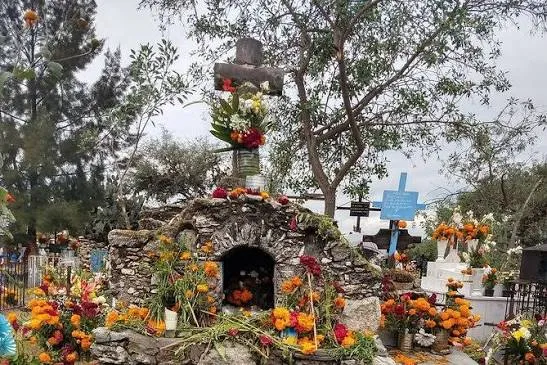
The public altars, parades, and cemetery observations are genuine cultural and spiritual events. Families at cemetery vigils are honoring real people they loved and lost. Approach with the same quiet respect you would bring to any sacred space, regardless of your own religious background.
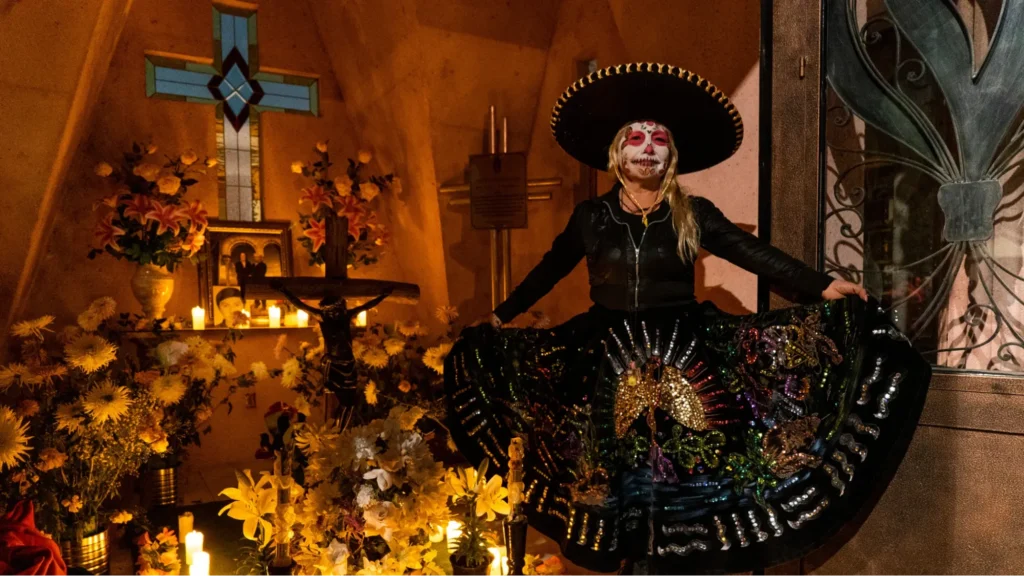
Face painting as a Catrina, the elegant female skeleton figure associated with the holiday, is considered appropriate when done respectfully within the context of the celebration. It is not a costume. If you choose to participate in that way, do it because you understand what it means, not because it makes a good photograph.
Additionally, ask before photographing people at cemetery vigils or in front of private altars. Many families are happy to share. Some are not. The difference matters.
Dress modestly when visiting cemeteries. Bring marigolds if you are visiting a community grave site or a public altar. Small gestures of participation are recognized and appreciated.
WHEN TO GO
I am arriving in Merida on October 28th and staying until November 2nd. When planning keep in mind the main dates are October 31 through November 2, with November 1 and 2 being the most significant. However, preparations and public installations begin earlier, sometimes as far back as mid-October in Oaxaca and Mexico City.
November 2 falls on a Monday in 2026, which means the weekend before will carry much of the energy. Planning for at least four nights gives you time to experience multiple dimensions of the celebration without rushing.
Book hotels early. This is one of the most popular travel periods in Mexico, particularly in Oaxaca and Mexico City. The better properties in both cities fill months in advance.
READY TO PLAN YOUR DÍA DE LOS MUERTOS TRIP?
This is not the kind of experience that translates fully through a blog post or a photograph. I am told it has to be felt in person. The smell of copal and marigolds. The sound of a cemetery filling with music instead of silence. The sight of a family spending the night beside a grave lit by candlelight, talking and laughing and eating together. I am attending the celebration in Merida this year and you can expect a blog post of my experience when I return.
I can help you build a trip around this celebration that goes beyond the surface. The right city for your travel style, the right hotel, the right local guides who will give you context that no guidebook provides.
I am attending the celebration in Merida this year and you can expect a blog post of my experience when I return.
TO BE CONTINUED….