Every year, people across the world carve pumpkins, dress in costumes, and go door to door collecting candy. Most of them have no idea they are participating in a tradition that began on a hillside in Ireland over 2,000 years ago.
Ireland is not a destination that borrowed Halloween. Ireland created it. The ancient Celtic festival of Samhain, pronounced sow-in, was the original Halloween. It was celebrated on the island of Ireland long before any other culture adopted or adapted it. Today, Tourism Ireland officially calls the island the Home of Halloween, and that title is not marketing language. It is history.
As a travel advisor, I have recommended Ireland in October to clients who wanted something with genuine cultural depth rather than a commercial holiday backdrop. What they found surprised them. The celebrations here are not replicas of something American. They are the source material. The bonfires, the costumes, the sense that something thin and permeable exists between the living world and something beyond it: all of that started here.
IRELAND HOME OF HALLOWEEN 2026
In 2025, the Ireland Home of Halloween programme supported over 830 events across the island, attracting more than 322,000 domestic and international visitors and generating over €43 million in economic impact.
The scale of this is worth noting. This is not a regional event. It is a coordinated, island-wide celebration of a tradition that genuinely originated here. October in Ireland is one of the most compelling travel windows I can recommend with genuine conviction.
The 2026 programme is the largest yet. Destinations involved include Fingal, Galway, Kerry, Kilkenny, Limerick, Longford, Meath, and Louth. Additionally, the internationally renowned Derry Halloween Festival, which marks its 40th anniversary in 2026, anchors the Northern Ireland component of the programme.
THE MAJOR FESTIVALS: WHERE TO GO AND WHAT TO EXPECT
Derry Halloween: Europe’s Largest Halloween Festival
Derry Halloween: Europe’s Largest Halloween Festival and One of the Best Family Events Anywhere
The Derry Halloween Festival transforms the Walled City with spectacular light shows, acrobats, fire performances, folklore, and a carnival atmosphere across four nights. It blends ancient Samhain rituals with modern festivities and is genuinely designed for all ages. More than 120,000 visitors attend across the festival period.
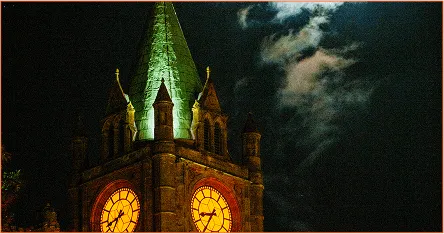
For families, Derry delivers in a way that very few Halloween events in the world can match. Children in costumes are everywhere and completely at home here. The parades are visually spectacular without being frightening for younger kids. The light shows and street performers create a sense of wonder rather than fear. The walled city is compact and walkable, which makes navigating with children far easier than larger city events. Furthermore, the festival atmosphere is celebratory and communal rather than horror-focused, which means families with children of any age can engage fully with everything on offer.
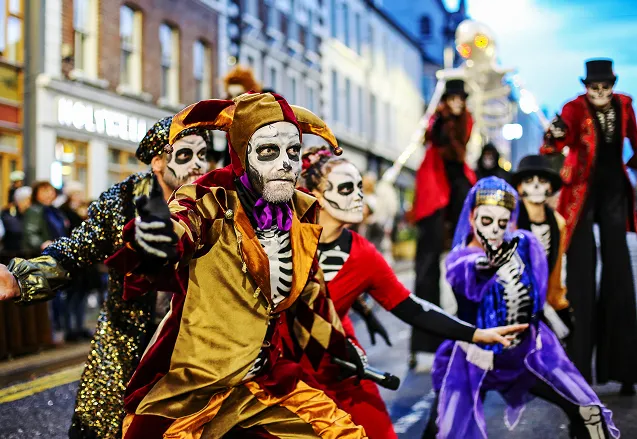
The 40th anniversary in 2026 makes this an exceptional year to attend. The city of Derry itself is worth visiting independent of the festival: the 17th century walls are among the best-preserved city fortifications in Europe, and the history within them amplifies everything that happens here in late October.
The parade on October 31 is the centerpiece. Elaborate floats, fire performers, aerial acrobats, and thousands of costumed participants fill the walled city streets. The River Foyle fireworks display over the water creates one of the most photographed moments of the entire Irish Halloween season.

Púca Festival: County Meath and the Ancient Heartland
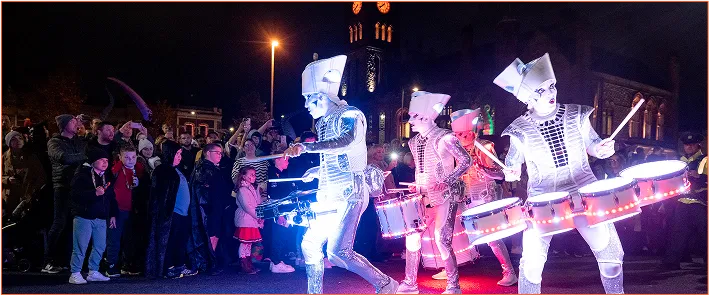
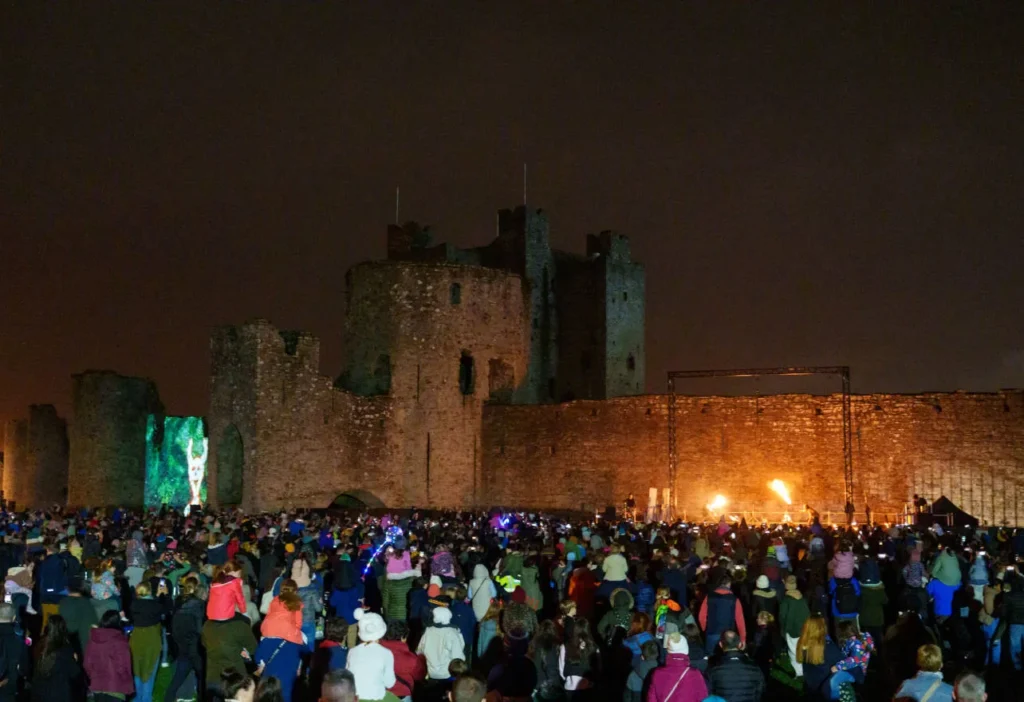
The Púca Festival in Trim and Athboy, County Meath, is a folklore-rich event honoring the shapeshifting Púca spirit with fire performances, music, comedy, processions, and harvest markets. It celebrates Ireland’s Celtic Halloween origins in the very landscape where they began.
County Meath is where Samhain began in its most organized form. The Hill of Ward, where Druids lit the first fire of the Celtic new year, sits within the festival area. The Boyne Valley nearby holds Newgrange, a 5,200-year-old passage tomb older than Stonehenge. Trim Castle, the largest Anglo-Norman castle in Ireland, provides the backdrop for much of the festival’s evening programming.
For families, the Púca Festival offers something genuinely different from any theme park Halloween event: a real landscape with real mythological weight. Children who are curious about where Halloween actually comes from will find the festival’s harvest markets, storytelling sessions, and fire ceremonies far more memorable than anything commercial. The surrounding countryside, with its ancient monuments and castle ruins, provides context that turns a festival visit into something closer to a living history lesson.

Bram Stoker Festival: Dublin’s Gothic Celebration
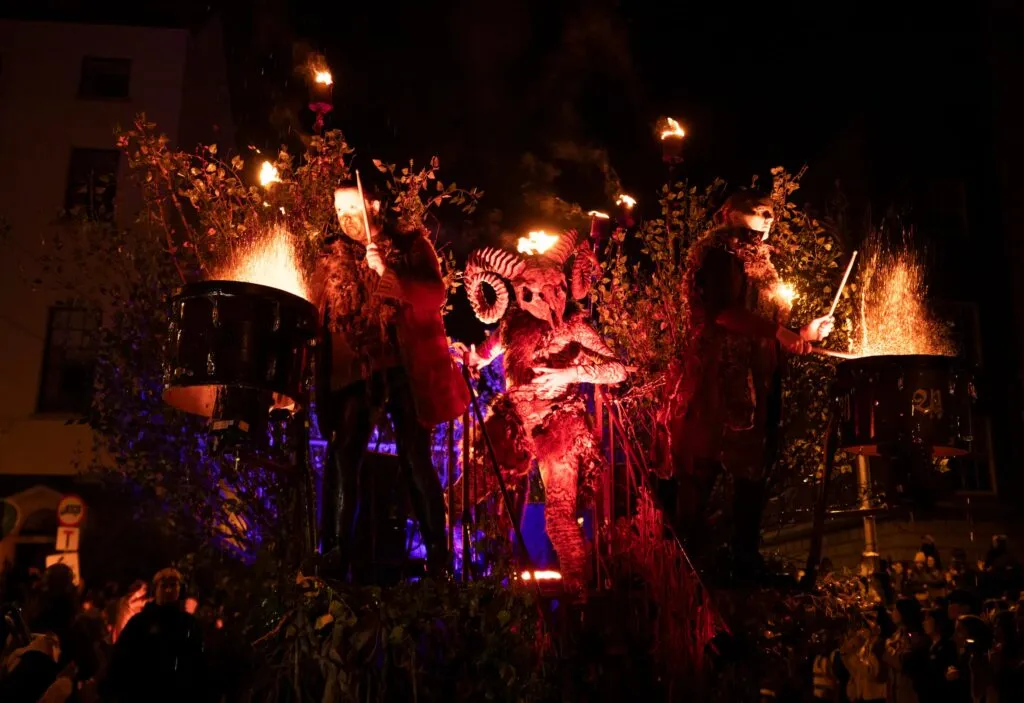
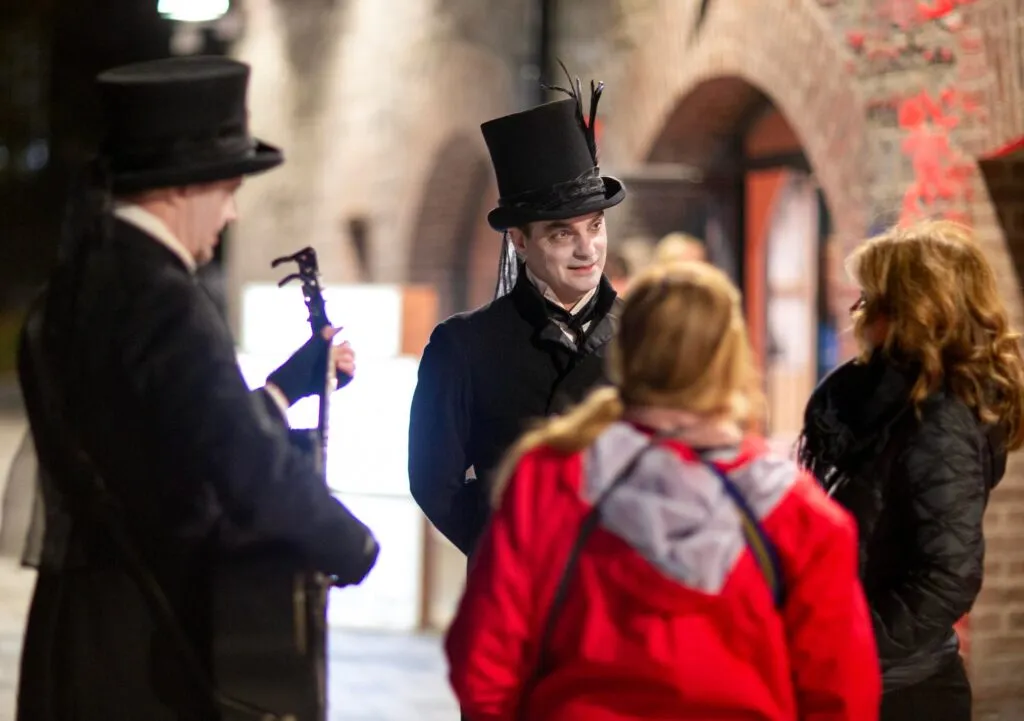
The Bram Stoker Festival is a multi-day celebration of gothic literature, theatre, and immersive art inspired by the author of Dracula, spreading his legacy through the eerie streets and cultural venues of Dublin.
Bram Stoker was born in Dublin in 1847. His novel Dracula draws on Irish folklore, Gothic literature, and a specifically Irish relationship with the supernatural that runs all the way back to Samhain. The festival is a genuinely excellent cultural event, not simply a horror novelty. Walking tours, theatre productions, film screenings, and large-scale outdoor installations spread across the city over four days. The festival draws significant international attendance and books up early.
For families with older children and teenagers, the Bram Stoker Festival is a strong fit. The walking tours through Dublin’s historic streets are engaging for older kids, and the outdoor installations are visually striking without being gratuitously frightening. Younger children are better suited to Derry or the Púca Festival, where the atmosphere is more celebratory than gothic.
Macnas Parade: Galway’s Giant Spectacle
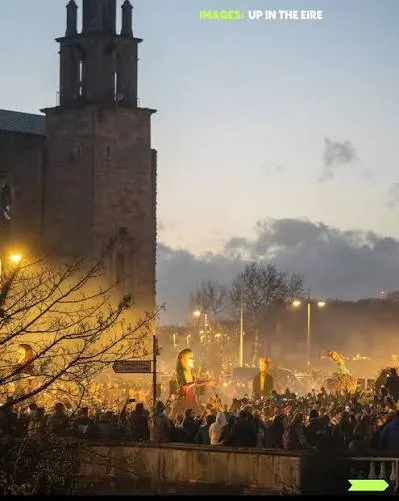
Galway contributes one of the most visually extraordinary events of the Halloween season: the Macnas Parade. Giant puppets, fantastical creatures, performers on stilts, and original music fill the streets in a spectacle that is simultaneously ancient in spirit and entirely contemporary in execution. Macnas is a professional arts company rooted in Galway that has been creating large-scale outdoor theatre for decades.
For families, the Macnas Parade is unmissable. The giant puppets alone make children stop completely. The scale of the performance, the sound, the movement, and the color create the kind of shared experience that families talk about for years afterward. Children of all ages respond to it. The parade runs through the city’s historic Latin Quarter and along the waterfront, and viewing spots along the route fill early, so arrive well ahead of the start time.

Gaillimh Ah-Boo and Other Regional Celebrations
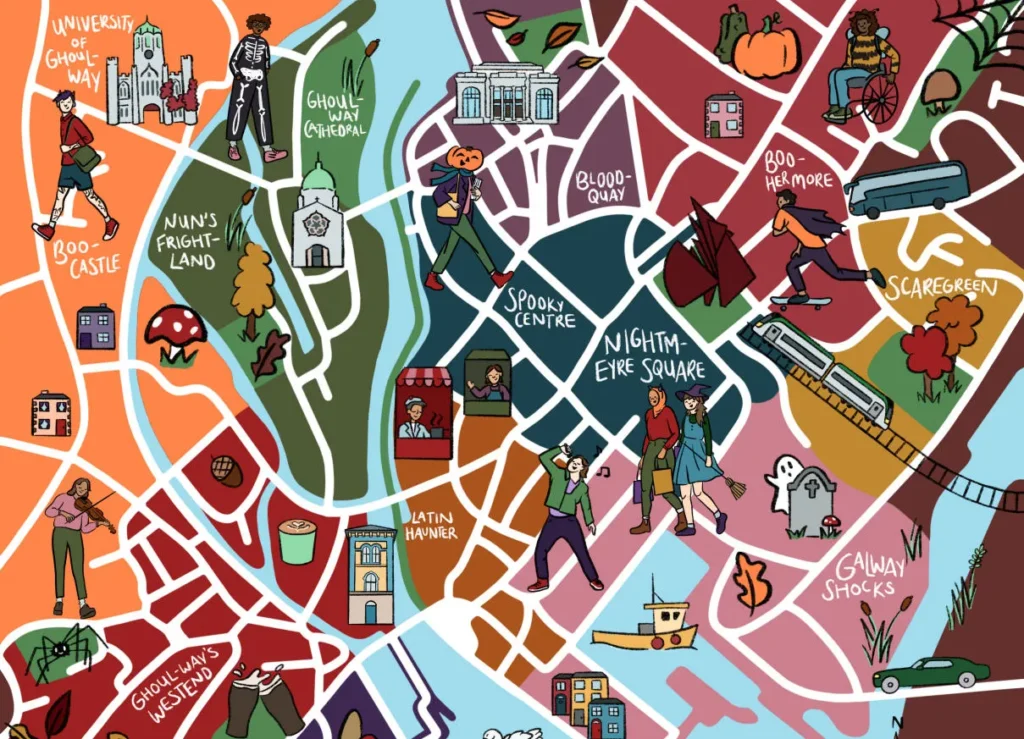
Beyond the four major events, the Ireland Home of Halloween programme activates celebrations in Kerry, Kilkenny, Limerick, Longford, and across counties that most visitors never see in the high season. These community events, smaller parades, fire festivals, and folklore evenings often provide the most intimate and genuinely surprising experiences of the season. For families who prefer a quieter, more local atmosphere, these regional events are worth seeking out.
THE PÚCA: UNDERSTANDING IRELAND’S MOST FAMOUS HALLOWEEN SPIRIT
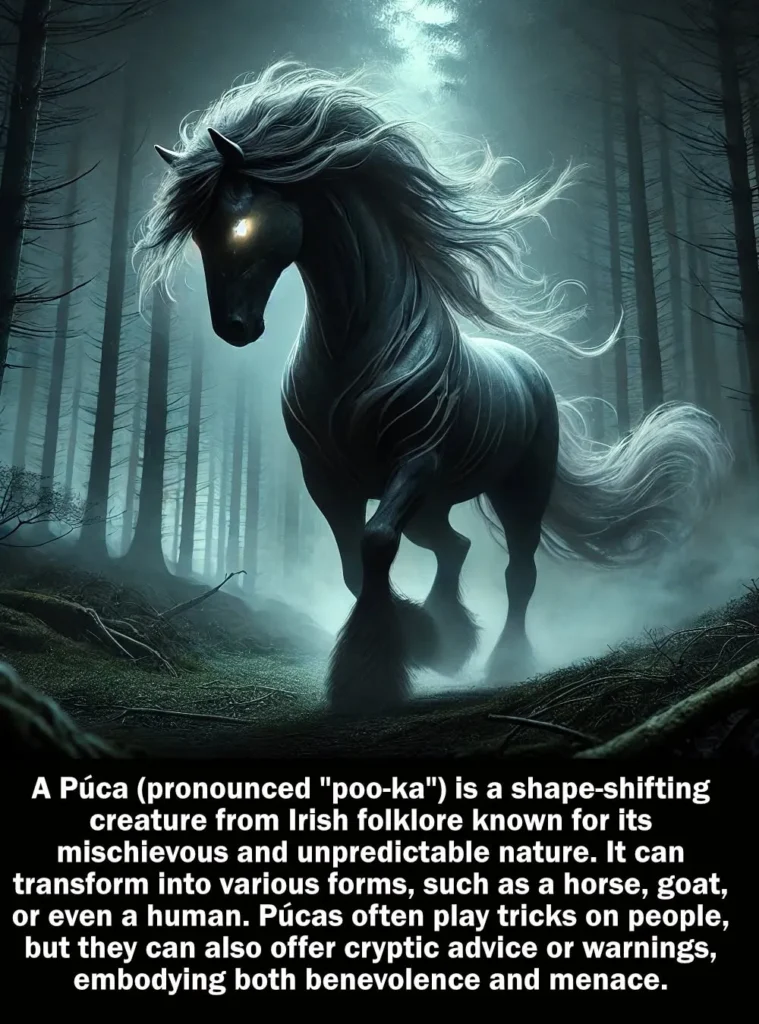
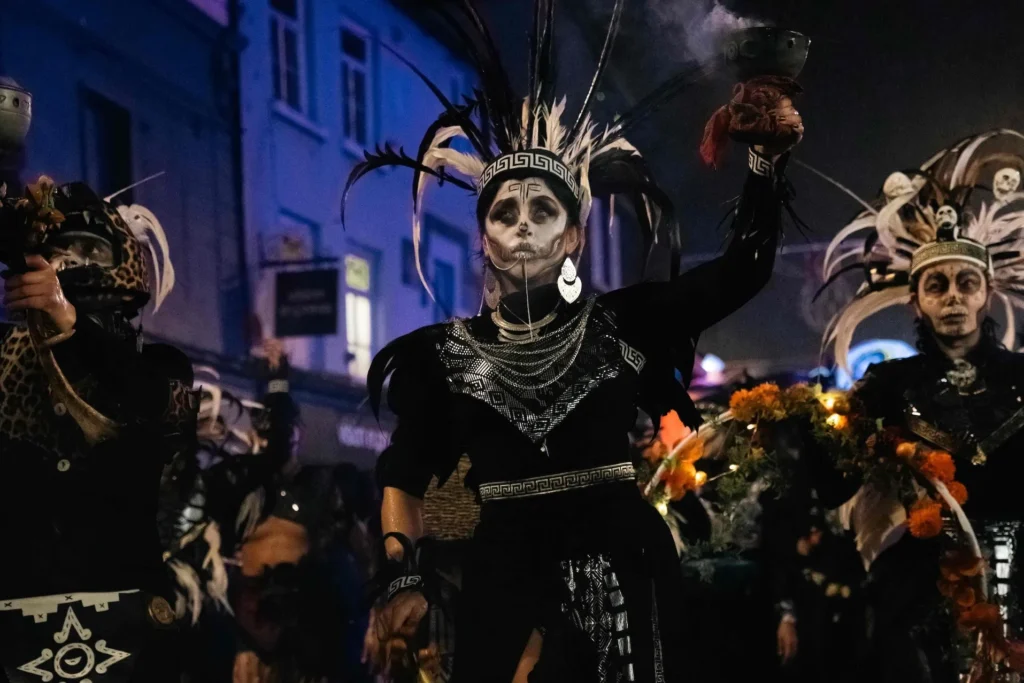
Halloween in Ireland has always centered on the supernatural, and the Púca is one of the most compelling figures in that world. A shapeshifter, the Púca could appear as a horse, a goat, a dog, an eagle, or a dark figure with glowing eyes. It was mischievous and unpredictable rather than straightforwardly evil. It could help or harm, guide or mislead, depending on the circumstances and its own unknowable mood.
November 1, the day after Samhain, was known in some Irish traditions as Lá na Púcaí, the Day of the Púca. Farmers left a portion of their harvest in the fields as an offering, believing the Púca contaminated any unpicked crops after this date. This was a practical tradition dressed in mythological language that made the end of the harvest season feel acknowledged rather than arbitrary.
The Púca is also one of the most effective ways to introduce children to Irish mythology. The creature’s shapeshifting nature, its mix of mischief and genuine danger, and its deep roots in the agricultural calendar make it a rich story for curious kids. Several of the storytelling events at both the Púca Festival and Derry Halloween use the Púca as a central character for exactly this reason.
THE ANCIENT ROOTS: WHAT SAMHAIN ACTUALLY WAS
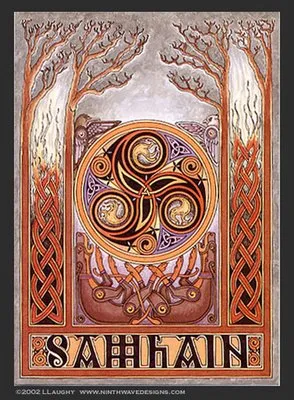
Samhain marked the end of the Celtic year. Specifically, it marked the end of the harvest season and the beginning of winter’s dark half. For the ancient Celts, October 31 was essentially New Year’s Eve. However, it was a new year that began not with celebration of what was coming but with reverence for what had passed.
The Celts believed the boundary between the living world and the spirit world became its thinnest at this time of year. Ancestors could cross back through. Supernatural beings moved more freely. The ordinary rules of the world loosened for a few hours. This is where the entire mythology of Halloween, the ghosts, the spirits, the sense of something uncanny in the air, actually originates.
Samhain means “summer’s end” in Old Irish. It was one of the most important festivals in the Celtic calendar, marking the end of the light half of the year and the beginning of the dark half. Furthermore, it was not simply a seasonal marker. It was a sacred threshold, a moment when the world itself changed its nature.
The first historical record of the Samhain tradition dates back to a bronze calendar found in Coligny, France, in the 1st century BCE. This confirms how deeply established the festival was across Celtic culture, and how Ireland stood at its center.

THE BONFIRES AND WHAT THEY MEANT
The bonfire was the defining act of Samhain. Bonfires were lit on every hilltop in Britain and Ireland as soon as the sun set on October 30. These were not casual gatherings. They were community rituals with specific purposes.
The fires served multiple functions. They honored the dead, who were believed to be traveling nearby. Additionally, they warded off malevolent spirits who moved more freely during this liminal period. The ashes from the bonfires were scattered on fields afterward to protect future crops. The fire was simultaneously a beacon for good spirits and a barrier against harmful ones.

The Hill of Ward in County Meath, known in Irish as Tlachtga, was one of the most important Samhain fire sites in all of Ireland. Druids lit the ceremonial first fire of Samhain here, and other fires across the island could only be lit from it. Today, the Púca Festival in County Meath still lights a ceremonial fire on this same hill each year. That continuity is remarkable. It is the same place, the same ritual significance, carried forward across two millennia.

WHERE COSTUMES, TRICK OR TREAT, AND JACK O’LANTERNS CAME FROM
The origins of every major Halloween tradition trace directly back to Samhain Ireland. None of them are modern inventions.
Costumes began as protective disguise. During Samhain, people gathered around bonfires in animal skins and masks. The belief was that evil spirits wandering the earth would be warded off by these disguises. If you looked like a spirit, the dangerous ones would leave you alone. That logic is 2,000 years old.
Trick or treating has its roots in a medieval Irish practice called mumming, sometimes also called guising. In Ireland, mumming involved wearing costumes, going door to door and singing songs to honor the dead, with cakes given as payment. When waves of Irish and Scottish immigrants arrived in America in the 1800s, they brought these traditions with them. The candy and the American scale came later. The door-to-door custom came from Ireland.
Jack o’lanterns were originally carved from turnips, not pumpkins. Pumpkins grew in America, not Ireland. When Irish immigrants arrived and discovered pumpkins were far easier to carve, they made the practical switch. However, the carved lantern tradition itself began in Ireland, lit from the inside to guide spirits or frighten them away.

HOW CHRISTIANITY SHAPED WHAT SAMHAIN BECAME
When Christianity began to spread through Ireland in the early medieval period, the Catholic Church incorporated the honoring of the dead into the Christian calendar. All Saints’ Day was set on November 1 and All Souls’ Day on November 2. The evening before All Saints’ Day became known as All Hallows Eve, and later Halloween.
This blending was not accidental. The Church recognized that Samhain was deeply embedded in Irish culture and could not simply be replaced. Instead, the observances layered over one another across centuries. The folk customs of Samhain survived within the framework of the Christian calendar.
The result is the tradition we have today: a celebration that carries both pre-Christian Celtic roots and Catholic influence at the same time, which is exactly why Halloween feels simultaneously ancient and modern, spiritual and playful.
PRACTICAL INFORMATION FOR PLANNING AN IRELAND HALLOWEEN TRIP
When to Go
The main dates are October 28 through November 1, with October 31 being the most significant night across every destination. The Bram Stoker Festival in Dublin runs October 31 through November 3 in 2026. Book hotels early, particularly in Derry and County Meath. Both areas fill months in advance for this period.
Getting Around
Dublin Airport is the primary entry point for international travelers. Belfast International serves Northern Ireland and provides easy access to Derry. Trains and coaches connect Dublin to Galway, Kilkenny, Limerick, and other festival destinations. For County Meath and the Boyne Valley, a rental car gives you the freedom to explore the landscape properly. Families with children will find a car particularly useful for day trips between festival sites and the surrounding countryside.
How Long to Stay
Five to seven nights allows you to experience more than one festival and still spend time in the Irish countryside. A shorter visit of three to four nights works well if you focus on a single destination. Derry and Galway both offer enough concentrated programming to fill a shorter trip. Families considering multiple festivals should plan at least six nights to avoid rushing between cities.
Dressing for October in Ireland
October in Ireland is cool and wet. Temperatures range from roughly 8 to 14 degrees Celsius. A waterproof jacket is essential. Layers work better than a single heavy coat. Sturdy, comfortable footwear matters for cobblestone streets and outdoor festival grounds. And bring costumes. Ireland takes Halloween seriously, and showing up in costume is not unusual for adults or children. In fact, arriving in costume at the Derry parade or the Macnas event adds considerably to the experience.
Is Ireland a Good Halloween Destination for Families?
The short answer is yes, and it is often better than people expect. The celebrations here are communal, outdoor, and rooted in storytelling rather than horror. The Derry festival and the Macnas Parade in Galway are both explicitly all-ages events. The Púca Festival in County Meath offers genuine cultural depth that engages curious children differently from any theme park alternative. Ireland in late October also has the advantage of being genuinely atmospheric: the landscape, the light, the old stone walls, and the ancient monuments provide a backdrop that reinforces everything the festivals are celebrating. For families who want Halloween to feel like more than a commercial event, Ireland is the answer.
HOW TO PARTICIPATE RESPECTFULLY
The Halloween celebrations in Ireland are genuine cultural events rooted in living traditions, not tourist performances. Treat them accordingly.
The fire ceremonies at the Púca Festival, specifically the lighting of the Samhain fire on the Hill of Ward, carry real spiritual weight for many Irish people. Observe with the same respect you would bring to any sacred site. Additionally, if you visit smaller village events or community gatherings, remember that these are organized for local communities first. Visitors are welcome, but the event is not designed around visitor needs.
Engage with curiosity rather than spectacle. Ask questions. Listen to the folklore. Buy something from a local market. Leave the festival understanding something genuinely new about where Halloween actually came from. That is the experience Ireland is offering, and it is one of the most worthwhile travel experiences available anywhere in the world in October.
READY TO PLAN YOUR IRELAND HALLOWEEN TRIP?
The 2026 season marks the 40th anniversary of the Derry Halloween Festival and the second year of the expanded Ireland Home of Halloween all-island programme. It is an exceptional year to go.
I can help you build a trip around this that goes beyond simply attending a parade. The right hotel in the right location, the right mix of major festival events and quieter countryside experiences, and the context to understand what you are seeing when you see it. That is what a travel advisor brings to a trip like this.
Reach out and let’s plan something genuinely memorable.